
Trailer Buying Guide: How to Pick the Right Trailer
How to choose between utility, dump, enclosed, and car hauler trailers based on GVWR, tow vehicle capacity, and price, with a canonical size and price table.
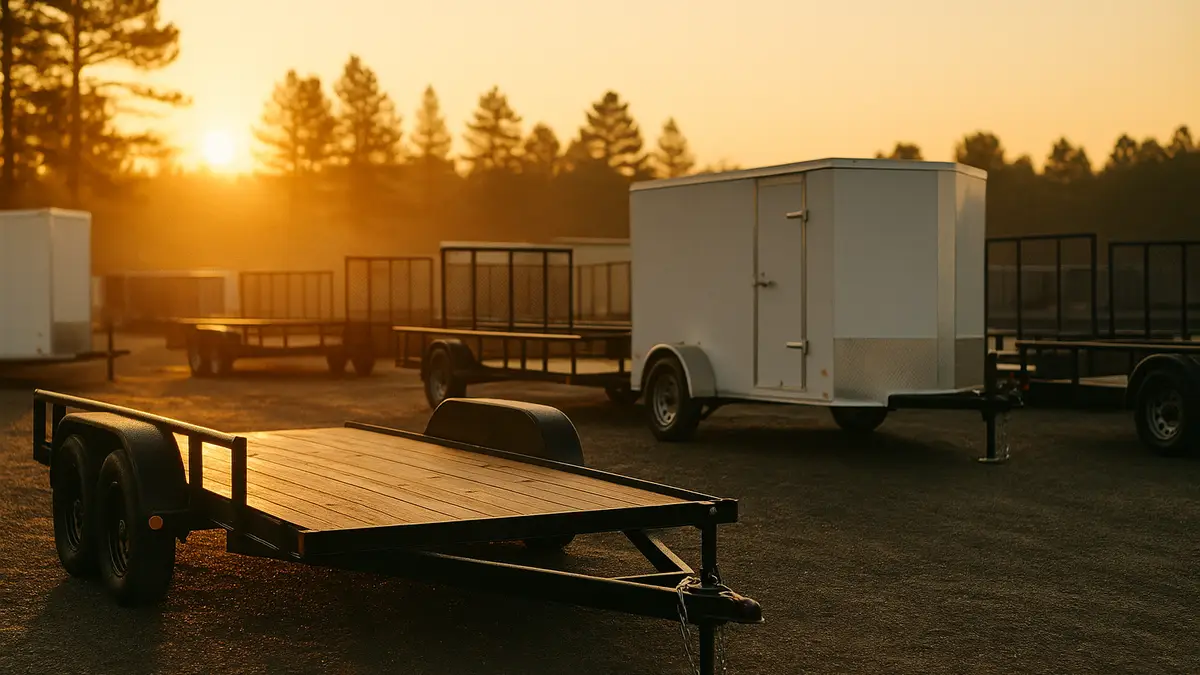
Most people shop for a trailer the way they shop for a couch: by size and price. That gets you a trailer that looks right in the driveway and fails the first time you actually load it. The trailer that fits your job is defined by GVWR, not floor length.
What type of trailer do you actually need?
Start with the job, not the trailer. Hauling mulch, gravel, or debris that you dump and shovel points to a dump trailer. Moving furniture, tools, or anything that needs to stay dry points to an enclosed cargo trailer. Hauling a mower, ATV, or open equipment points to a utility trailer. Moving a car, truck, or heavy equipment on wheels points to a car hauler or a gooseneck flatbed. Buying a trailer for a job you do twice a year rarely pencils out against renting; buying one for work you do every week almost always does.
What size and price should you expect?
The table below is the canonical range for each trailer type, so you can sanity-check any listing against real market bands instead of guessing.
| Trailer type | Size range | GVWR range | Price (new) |
|---|---|---|---|
| Utility (open) | 5x8 to 6x12 ft | 2,990-7,000 lbs | $1,200-$4,500 |
| Dump | 6x10 to 7x16 ft | 7,000-14,000 lbs | $6,500-$14,000 |
| Enclosed cargo | 5x8 to 8.5x24 ft | 2,990-9,990 lbs (up to 14,000 lbs tandem) | $3,500-$12,000 |
| Car hauler (open) | 18-22 ft deck | 7,000-10,000 lbs | $3,000-$7,000 |
| Motorcycle (enclosed) | 4x7 to 6x12 ft | 2,000-3,500 lbs | $2,500-$6,000 |
| Gooseneck (flatbed/deckover) | 20-40 ft | 14,000-25,000+ lbs | $9,000-$25,000+ |
A trailer’s GVWR is its maximum loaded weight rating, frame plus cargo plus fluids. It is not the same number as how much cargo it can carry; that number, payload capacity, is GVWR minus the empty trailer weight, and it is usually printed on the same VIN sticker.
How much trailer can your tow vehicle handle?
This is where most first-time buyers get it wrong: they fall in love with a trailer before checking whether their truck or SUV can legally and safely pull it. Your tow vehicle has its own GVWR, GCWR, and payload limits, and the trailer’s loaded weight (not its empty weight) is what counts against them. Our towing capacity guide walks through GVWR, GCWR, and payload in detail, and the towing capacity calculator will tell you your exact margin once you know the trailer’s real loaded weight.
A rough rule that holds for most buyers: keep the trailer’s loaded weight at or under 80% of your tow vehicle’s rated max, so you have margin for cargo, passengers, and a loaded tongue.
Open vs enclosed: which one do you need?
Open trailers (utility, dump, flatbed, most car haulers) cost less, weigh less, and load and unload faster because there is no door to navigate. Enclosed trailers protect cargo from rain, road grime, and theft, and they can double as lockable storage. If you are hauling tools or inventory for a business, enclosed usually wins on security alone. If you are hauling dirt, mulch, or equipment that does not care about weather, open saves you thousands of dollars for no real downside.
New vs used: how much do you actually save?
Used trailers commonly run 30-50% below new-trailer prices for a comparable size and age, but the savings only hold up if the frame, axles, and tires check out. A used dump trailer with a failing hydraulic ram or a rusted frame is not a bargain at any price. Before buying used, work through our used trailer inspection checklist, which covers the 12 points that actually predict whether a used trailer will cost you more in repairs than it saved you at purchase.
Who should buy which trailer type?
Landscapers and yard-work DIYers want a utility trailer for mulch bags and mower hauling, or a dump trailer once loose material (gravel, soil, debris) becomes a weekly job. See our dump trailer buying guide and utility trailer buying guide.
Contractors and mobile businesses who carry tools, inventory, or equipment that needs to stay dry and locked up want enclosed cargo. Our cargo trailer buying guide and enclosed trailer buying guide cover sizing and door styles.
Car flippers, racers, and anyone moving vehicles want a car hauler or a gooseneck deckover, depending on weight; our car hauler buying guide breaks down open vs enclosed car transport.
Riders and small-fleet owners hauling a single motorcycle or ATV are usually over-trailered by a full utility trailer; a dedicated motorcycle trailer is lighter, cheaper to tow, and easier to store.
Who should not buy a trailer at all
If you need one for a single move, a single dump run, or a once-a-year hauling job, renting from a home center or U-Haul-style outlet almost always costs less than buying, insuring, and storing a trailer you use a handful of days a year. Buying only pencils out once you are renting more than three or four times annually.
Once you know your trailer type, the next decision is sizing it correctly and confirming your tow vehicle can handle it loaded, not empty. Start with the type-specific guide for your use case, then run the numbers through the towing capacity calculator before you sign anything.
Frequently asked questions
Quick answers to what readers ask us most
What size trailer do I need?
It depends on the job, not the truck bed. A 5x8 utility trailer handles yard debris and small loads; a 6x12 utility or 7x14 dump trailer covers most landscaping and small-contractor work; anything hauling a vehicle or large equipment moves into car hauler or gooseneck territory. Match the trailer to the heaviest single load you will regularly haul, not the biggest one you might haul once.
How much does a new trailer cost?
Open utility trailers run $1,200-$4,500 new, dump trailers $6,500-$14,000, and enclosed cargo trailers $3,500-$12,000, depending on size and axle count. Used trailers typically run 30-50% less, though inspection matters more than price on a used unit; see our used trailer inspection checklist.
Can my truck or SUV tow the trailer I want?
Only if the trailer's loaded weight, tongue weight, and combined weight with cargo all stay under your vehicle's rated limits. Check your GVWR, GCWR, and payload before you shop, not after you sign paperwork.
Is it better to buy a trailer new or used?
New trailers come with a warranty and no mystery history, which matters most for dump and gooseneck trailers with hydraulics or heavy frames. Used trailers save money on simple utility or enclosed units if you inspect the frame, axles, and tires carefully first.